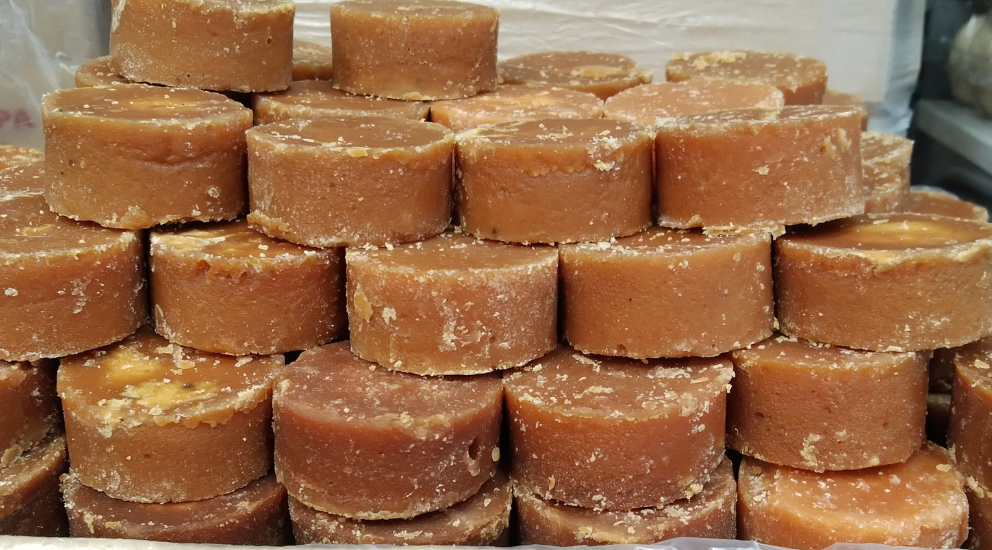
Jaggery
Jaggery, often referred to as “gur” in many regions, is a traditional, unrefined sweetener made primarily from sugarcane juice or date palm sap. Unlike refined sugars, jaggery retains essential minerals due to its natural production process, which involves boiling and solidifying the juice without removing the molasses content. This gives jaggery its characteristic golden to dark brown color and rich, complex flavor profile.
Export-quality jaggery comes in various forms including blocks, granules, and powder, depending on regional preferences and culinary applications. It is widely valued in international markets for its natural composition, nutritional benefits, and versatility. Compared to refined white or brown sugar, jaggery contains more minerals like iron, potassium, and calcium, making it a favored choice for health-conscious consumers.
Jaggery is used in a variety of global cuisines, especially in traditional sweets, beverages, marinades, and baking. It also serves as a natural sweetener in health drinks and herbal remedies. For export purposes, jaggery is often preferred in its organic or chemical-free variants, with emphasis on hygiene, shelf stability, and compliance with international food safety standards.